
Minimum Car Insurance Requirements — Rhode Island
Free to compare
What Rhode Island Actually Requires
Rhode Island mandates bodily injury liability of $25,000 per person and $50,000 per accident, plus $25,000 property damage liability. The state does not require personal injury protection (PIP) or uninsured motorist coverage. Every registered vehicle must carry proof of insurance—a card issued by your carrier showing these minimums.
The confusion around SR-22 persists because Rhode Island only eliminated the requirement in July 2018. Before that date, drivers with certain violations needed to file an SR-22 certificate. Today, no SR-22 or FR-type certificate exists in Rhode Island. The DMV's Insurance Verification Office (RIIVS) monitors coverage electronically; your carrier reports your policy status directly to the state.
“Rhode Island eliminated SR-22 in 2018—today you need only proof of insurance and the state-mandated liability minimums.”

Compare Rhode Island Car Insurance Quotes Today
Get My Rhode Island Car Insurance Quote$25,000 / $50,000 / $25,000
Rhode Island Liability Minimums
Bodily injury per person, bodily injury per accident, and property damage per accident. These are the only mandatory coverages—PIP and uninsured motorist are optional.
Rhode Island General Laws 31-47
Why Minimum Coverage Leaves Gaps
$25,000 per person covers medical bills, lost wages, and pain-and-suffering for one injured person in an accident you cause. A single emergency-room visit after a moderate-speed collision can exceed that limit. When your liability limit is exhausted, the injured party can sue you personally for the remainder.
$50,000 per accident is the total your policy pays when multiple people are injured. Property damage liability of $25,000 covers the other driver's vehicle and any property you damage—fences, mailboxes, storefronts. A totaled late-model SUV can exceed that limit.
Minimum coverage protects others, not you. It pays nothing for your own injuries, your own vehicle damage, or your medical bills if the at-fault driver is uninsured. Rhode Island's uninsured motorist rate is 12.4 percent—one in eight drivers on the road carries no insurance. If an uninsured driver hits you and you carry only minimum liability, you pay your own repair and medical costs out of pocket.

Minimum liability covers the other driver's costs, not yours. If an uninsured driver hits you, you pay your own repair and medical bills.
Related Articles
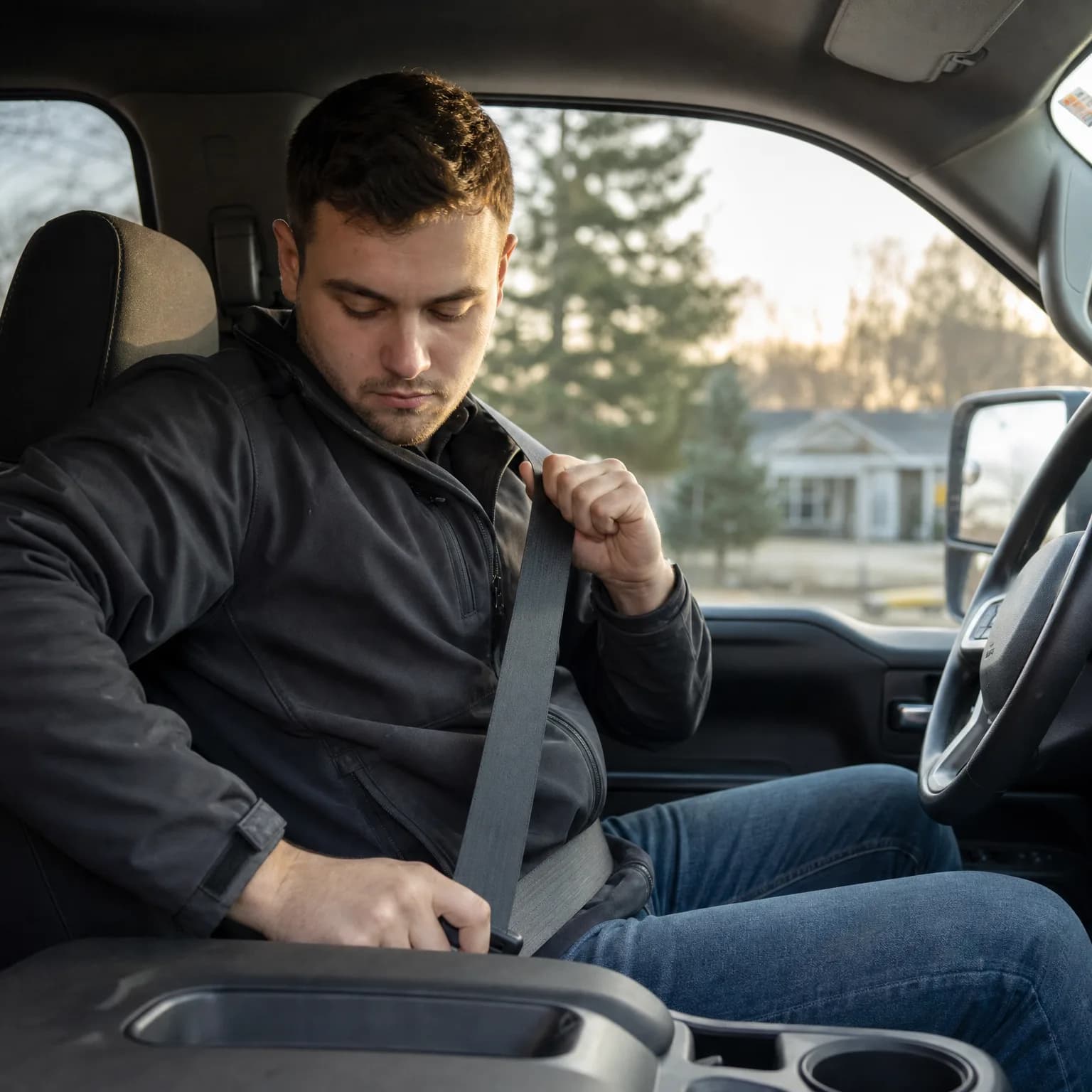






How to Prove Insurance in Rhode Island
Your carrier issues an insurance identification card showing your policy number, coverage dates, and the vehicle insured. Rhode Island law requires you to carry this card in the vehicle at all times. A police officer can request it during any traffic stop; failure to produce proof of insurance results in a fine and potential license suspension.
The DMV's Insurance Verification Office (RIIVS) monitors coverage electronically. When you register a vehicle, the DMV checks RIIVS to confirm active coverage. If your policy lapses or is canceled, your carrier reports the lapse to RIIVS within 10 days, and the DMV suspends your registration.
Some drivers believe an SR-22 certificate is still required after a DUI or license suspension. Rhode Island eliminated SR-22 in 2018. If you are reinstating a suspended license, you need proof of insurance—the standard card your carrier issues—and payment of the reinstatement fee. No separate filing certificate exists.
12.4%
Rhode Island Uninsured Motorist Rate
One in eight drivers on Rhode Island roads carries no insurance. If an uninsured driver causes an accident and you carry only minimum liability, you pay your own repair and medical costs.
Insurance Information Institute, 2023

Comparing Carriers in Rhode Island
Thirteen carriers write auto insurance in Rhode Island: Allstate, Amica, Farmers, Geico, Hartford, Liberty Mutual, National General, Nationwide, Progressive, State Farm, The General, Travelers, and USAA. Each carrier prices risk differently—your age, driving record, vehicle, and location produce different quotes across carriers. A driver with a clean record in Providence may find Amica or State Farm competitive; a driver with a recent violation may find better rates with Progressive, National General, or The General.
When comparing quotes, confirm each carrier is quoting the same coverage limits. Request quotes with identical limits, deductibles, and optional coverages. Most carriers offer online quotes; USAA restricts eligibility to military members, veterans, and their families.
What to Do Right Now
Confirm your current policy meets Rhode Island's $25,000/$50,000/$25,000 liability minimums. If you carry only minimum coverage, evaluate whether uninsured motorist coverage and higher liability limits fit your household's assets and risk tolerance. If your vehicle is financed, verify that collision and comprehensive are active—lenders require both until the loan is satisfied.
Request quotes from at least three carriers writing in Rhode Island. Compare identical coverage limits and deductibles across quotes. If you are reinstating a suspended license, contact the DMV to confirm the reinstatement fee and required documentation—no SR-22 certificate is needed. See Rhode Island-specific coverage options and carrier comparisons to structure a policy that meets state requirements and protects your household.
What Full Coverage Adds
Collision coverage pays to repair or replace your vehicle after an accident you cause or a collision with another vehicle, regardless of fault. Comprehensive coverage pays for theft, vandalism, fire, hail, flood, and animal strikes. Both coverages carry a deductible—you choose $500, $1,000, or another amount—and the insurer pays the remainder. If your vehicle is financed or leased, the lender requires both coverages until the loan is paid off.
Uninsured and underinsured motorist coverage pays your medical bills, lost wages, and vehicle damage when the at-fault driver carries no insurance or insufficient limits. Given Rhode Island's 12.4 percent uninsured rate, this coverage closes the gap minimum liability leaves open. Personal injury protection (PIP) is optional in Rhode Island but pays your medical bills and lost wages after any accident, regardless of fault, up to the limit you select.
Get Your Free Quote
Get My Rhode Island Car Insurance QuoteFrequently Asked Questions
What is the minimum car insurance required in Rhode Island?
Rhode Island requires $25,000 bodily injury liability per person, $50,000 per accident, and $25,000 property damage liability. The state does not mandate personal injury protection (PIP) or uninsured motorist coverage.
Does Rhode Island require SR-22 insurance?
No. Rhode Island eliminated SR-22 filing in July 2018. No separate filing certificate exists.
What happens if I drive without insurance in Rhode Island?
Your carrier reports policy lapses to the DMV's Insurance Verification Office (RIIVS) within 10 days. The DMV suspends your registration immediately.
Is uninsured motorist coverage required in Rhode Island?
No. Uninsured motorist coverage is optional in Rhode Island. Given the state's 12.4 percent uninsured motorist rate, this coverage pays your medical bills and vehicle damage when an at-fault driver carries no insurance.
What is full coverage car insurance in Rhode Island?
Full coverage is not a legal term—it typically means a policy with collision, comprehensive, and higher liability limits beyond the state minimums. Collision pays for your vehicle damage after an accident; comprehensive covers theft, vandalism, and weather damage.
How do I prove car insurance in Rhode Island?
Your carrier issues an insurance identification card showing your policy number, coverage dates, and vehicle insured. Rhode Island law requires you to carry this card in the vehicle at all times and present it to law enforcement on request.
Which car insurance carriers write policies in Rhode Island?
Thirteen carriers write auto insurance in Rhode Island: Allstate, Amica, Farmers, Geico, Hartford, Liberty Mutual, National General, Nationwide, Progressive, State Farm, The General, Travelers, and USAA. USAA restricts eligibility to military members, veterans, and their families.