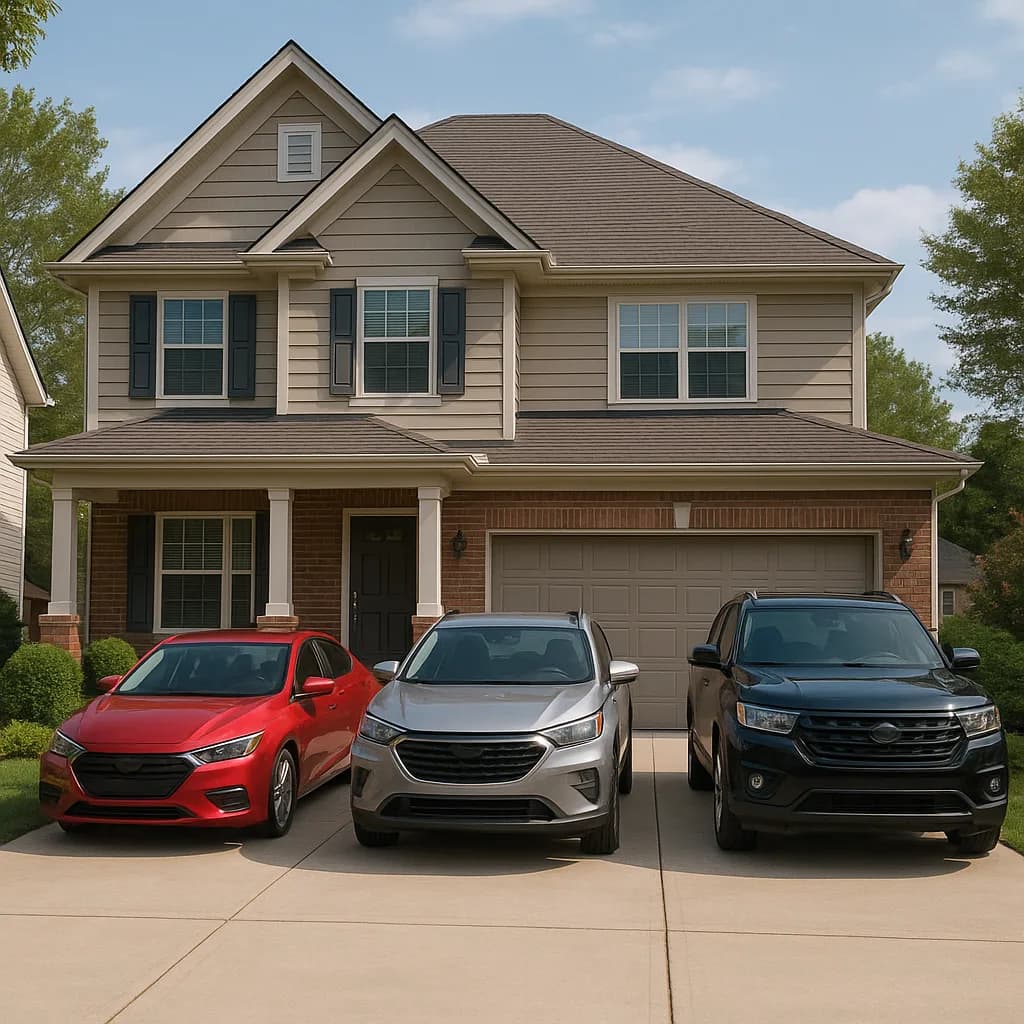
When Adding a Vehicle Changes Your Premium More Than Expected
You just bought a second car and added it to your Rhode Island auto policy. The premium increased, but not by a flat amount—the entire policy re-rated. You expected the multi-car discount to offset the cost of the new vehicle, but the bill suggests otherwise. This confusion stems from how insurers structure multi-vehicle policies: adding a car mid-term triggers a full re-rating of every vehicle on the policy, not a simple add-on charge.
Rhode Island requires $25,000 bodily injury per person, $50,000 per accident, and $25,000 property damage as minimum liability coverage. When you add a vehicle, the carrier recalculates your entire household's risk profile—driver assignments, garaging location, vehicle use patterns—and applies the multi-car discount to the new combined premium. The discount exists, but it applies to a recalculated base, not the old premium plus a new car's cost.
Compare car insurance rates in your state
Get quotes from licensed carriers — no obligation, no spam, results in minutes.
Get Your Free QuoteRhode Island Minimum Liability
Every vehicle registered in Rhode Island must carry at least $25,000 bodily injury per person, $50,000 per accident, and $25,000 property damage. These minimums apply to each vehicle on your policy, whether you insure one car or five.
Rhode Island DMV
The Multi-Car Discount Requires Same-Policy Enrollment
The multi-car discount applies only when every vehicle sits on the same policy. A car titled to your spouse but covered under a separate policy does not count toward your multi-car discount, even if you live at the same address. Carriers define "multi-car" as multiple vehicles listed on a single policy declaration, not multiple vehicles owned by the same household across different policies.
Rhode Island households often assume that combining policies after marriage or a household move will automatically trigger the discount. It does—but only after both vehicles transfer to one policy. Until then, each policy stands alone. The same-policy requirement also means that a newly-purchased vehicle must be added to your existing policy within the carrier's grace period, typically 14 to 30 days, to maintain continuous coverage and qualify for the discount from the purchase date.
Garaging address matters. Most carriers require that all vehicles on a multi-car policy share the same primary garaging location. A car garaged at a second home, a college student's dorm, or a work parking lot may not qualify for the same-policy discount, depending on the carrier's underwriting rules. When a household member moves but keeps their car on your policy, confirm with your carrier whether the new garaging address disqualifies the discount.
A vehicle titled to someone outside your household—or garaged at a different address—may not count toward the multi-car discount, even if it's listed on your policy.
How Adding a Vehicle Re-Rates Your Policy

The carrier assigns each driver in your household to a primary vehicle. If you add a third car but only two drivers are listed, the insurer assumes the highest-risk driver will operate the new vehicle, which raises the premium more than adding a low-risk driver would. Driver assignments are not always intuitive: a teenager listed as an occasional driver on your sedan may be reassigned as the primary driver of the newly-added car, triggering a sharp rate increase even though the teen was already on the policy.
The multi-car discount applies to the new combined premium, not the old premium. The discount exists, but it works on a higher starting point. This is why adding a vehicle can feel more expensive than expected: the discount offsets part of the increase, but not all of it.
Related Articles




State-Specific Carrier Options for Multi-Vehicle Households
Rhode Island households have access to 13 carriers writing auto insurance in the state. Allstate, Geico, Progressive, State Farm, USAA, Farmers, National General, The General, Liberty Mutual, Travelers, Nationwide, Amica, and Hartford all write policies in Rhode Island, though not all offer the same multi-car discount structure. Preferred-tier carriers like State Farm, USAA, and Amica typically offer deeper multi-car discounts but require clean driving records. Standard-tier carriers like Geico, Progressive, and Allstate write broader risk profiles and still offer multi-car discounts, though the percentage varies by carrier and household.
Non-standard carriers like The General and National General write multi-vehicle policies for households with violations, but the discount may be smaller or structured differently. If one driver in your household has a DUI or suspended license, the carrier may exclude that driver from operating certain vehicles or require a separate policy. This exclusion can disqualify the household from the multi-car discount entirely, depending on the carrier's underwriting rules.
Rhode Island does not use SR-22 certificates. The state eliminated the SR-22 requirement in July 2018, so high-risk drivers no longer need to file proof-of-insurance certificates with the DMV. This simplifies policy structure for multi-vehicle households: you do not need to coordinate SR-22 filings across multiple cars or worry about one vehicle's filing status affecting another's coverage.
Rhode Island Auto Insurance Market
13 carriers
Thirteen carriers write auto insurance in Rhode Island, spanning preferred, standard, and non-standard tiers. Households with multiple vehicles should compare carriers within their tier—preferred-tier households often see the deepest multi-car discounts, while non-standard households may find fewer carriers willing to write multi-vehicle policies.
Rhode Island Division of Insurance
Combining Policies After Marriage or a Household Move
When two people with separate auto policies marry or move in together, combining policies usually lowers the total premium—but not always. The combined policy re-rates both households' vehicles and drivers as a single risk pool. If one spouse has a clean record and the other has a recent violation, the combined policy may cost more than keeping two separate policies, because the higher-risk driver's record now affects every vehicle on the policy.
Timing matters. Combining policies mid-term triggers a re-rating and may require paying a short-rate cancellation fee on the policy you're closing. Most carriers allow you to combine policies at renewal without penalty, so if your renewal dates are within a few months of each other, waiting avoids the fee and simplifies the transition. If you combine mid-term, ask the carrier to pro-rate the old policy and apply any unused premium as a credit toward the new combined policy.
What to Do When Adding Your Next Vehicle
Before you buy the next car, call your carrier and ask for a quote that includes the new vehicle. Provide the VIN, the primary driver's name, and the garaging address. The carrier will re-rate your policy and show you the new premium before you commit. This prevents surprises at billing time and lets you compare whether adding the car to your existing policy costs less than starting a separate policy for it.
If the new vehicle is for a teen driver or a household member with a violation, ask the carrier whether excluding that driver from your other vehicles lowers the premium. Some carriers allow named-driver exclusions, which prevent a high-risk driver from operating certain cars on the policy. This can preserve your multi-car discount while isolating the higher-risk driver's impact to one vehicle. Not all carriers offer exclusions, and Rhode Island law does not require them, so confirm availability before assuming it's an option.
Compare carriers when you add a vehicle. The multi-car discount percentage varies by carrier, and a smaller discount on a lower base premium can cost less than a larger discount on a higher base. Rhode Island's 13-carrier market gives you options—use them. Get quotes from at least three carriers, and ask each to break out the multi-car discount as a line item so you can see exactly what it's saving you.
Compare Multi-Car Policies in Rhode Island
You now understand how the multi-car discount works, why adding a vehicle re-rates your entire policy, and what same-policy enrollment requires. The next step is comparing carriers that write multi-vehicle policies in Rhode Island. Start with the 13 carriers listed above, request quotes that include every vehicle and driver in your household, and ask each carrier to itemize the multi-car discount. The discount exists, but its value depends on the carrier's base premium and underwriting rules—compare the final premium, not just the discount percentage.